Leena Fan
The brief had three parts: a small budget, motors that don't look like much, and a website people would want to stay on.
Leena Fan has been building electric motors in Mumbai for over 35 years. They go into cleanrooms, laboratories and chemical plants. They are built to run, not to be looked at.
The website still had to look awesome.
Everything around the motor
The budget had no room for a photo shoot, and no design was going to change what a motor looks like. So I stopped trying to fix the motor and worked on everything around it.
The top of the home page shows how. It starts with a plain photo, and each layer adds one small thing.
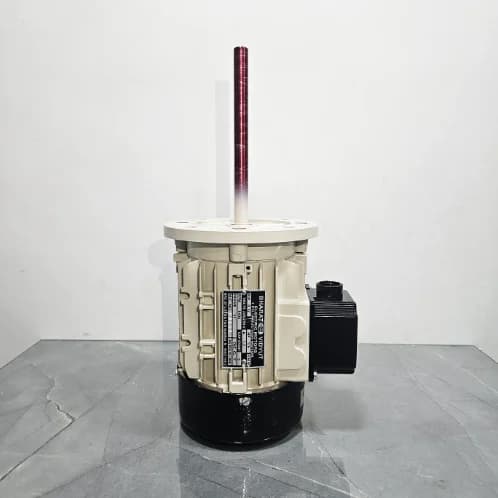
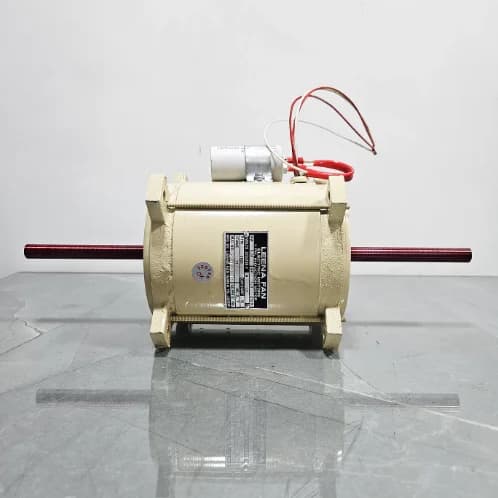
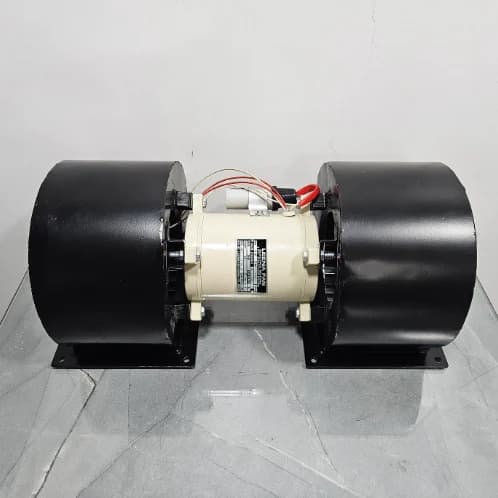
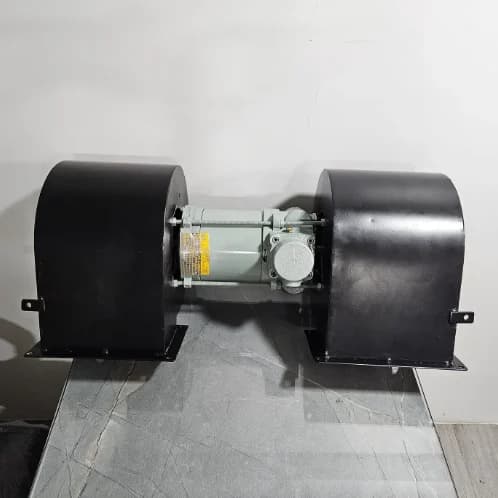
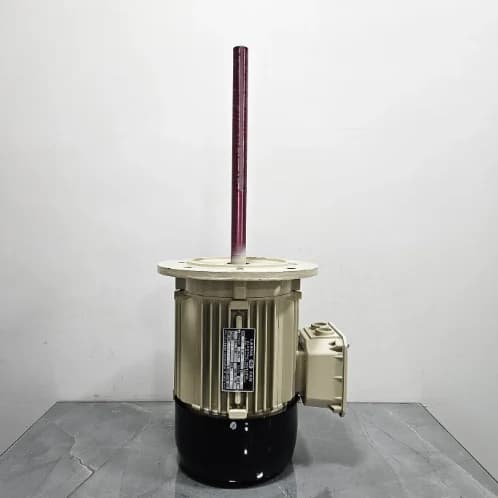
None of those layers needed a bigger budget. The motor is the same plain photo in every one.
Colours from the workshop
The colours were already in the photos: the cream of the casing, the deep red of the wiring and the near-black of the blower housings.
White would have made the motors look out of place, so the pages sit on warm paper instead. Archivo gives the headlines weight, and Inter keeps the reading easy. JetBrains Mono handles every spec, so 1400 RPM1 reads like a line on a nameplate.
123A reason to stay
Good looks get someone through the door. To keep them scrolling, every part of the home page brings something new: motors that change on their own, numbers that count up, a band of industries sliding past, and a process line that draws itself.

People stay longest when a site is useful. All 93 models are in the catalogue, across six lines, and you can filter by line and speed, or search by HP, CFM or model.
The part that does the most work is the enquiry list. You add motors as you browse, set the quantities and send one request, instead of a separate form for every motor.
The list is saved in your browser, so it's still there when you return.
The same motors
The budget stayed small, and the motors didn't change at all.
Only everything around them did.
See it for yourself at leena-fans.vercel.app.Footnotes
RPM is revolutions per minute, HP is horsepower, and CFM is cubic feet per minute, a measure of airflow. ↩