PU Code Hackathon
We were asleep in the hall when they started announcing the winners.
Then I heard a name: Quantum Coders.
That was us. Not once in the whole hackathon had we thought we would win.
Friends from the village
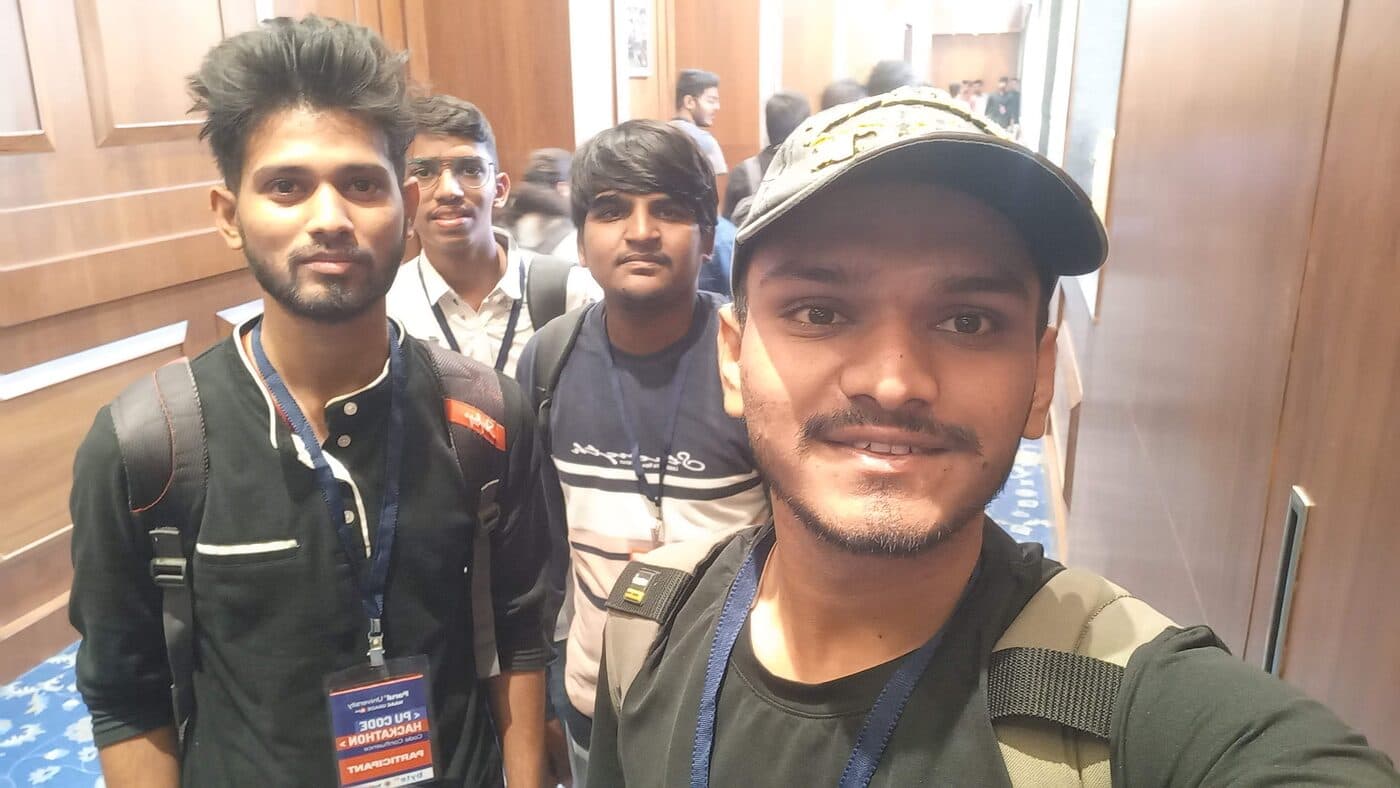
By then I had been to plenty of hackathons, so I knew what one takes. But I had never gone to one with my friends from the village.
So I registered us for the PU Code Hackathon,1 a 36-hour event at Parul University. The team was Mahiraj and Ayush from the village, Rohit, my college mate from Bihar, and me, leading. I picked the name Quantum Coders at random.
The problem that wasn't on the list
We were given a list of problem statements, but nothing on it felt like something I could deliver well. So we took the open-ended option and chose our own.
The problem was one every family knows: getting work done at home. Finding someone quickly is hard, quality is a gamble, and the price is rarely a good one.
Our answer was Home Helps, an on-demand home services app.
Let the providers come to us
The big players controlled the money, so they could raise prices however they liked. We wanted to change who held that power.
On Home Helps, any local provider could register themselves. Our team would verify and approve them, and only then would they appear to customers nearby. No platform we knew of worked this way at the time.
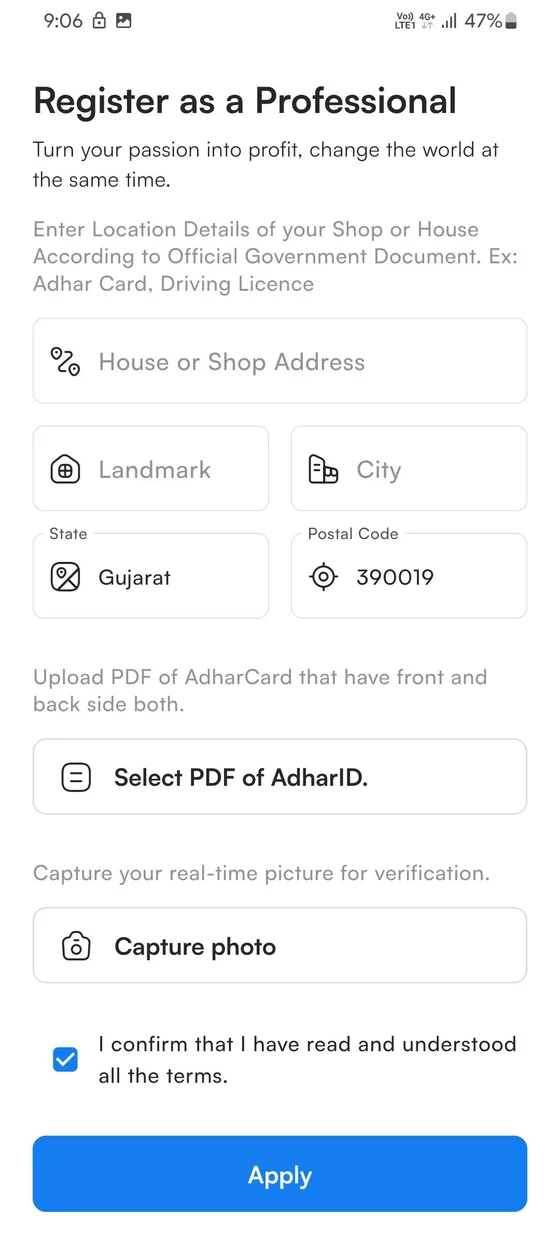
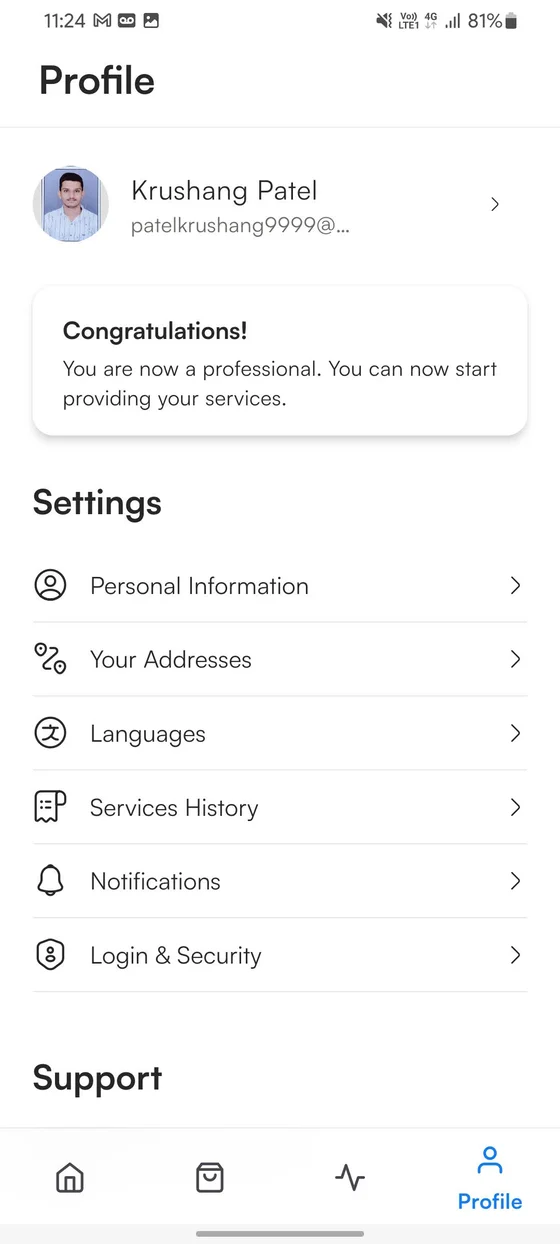
That one idea changed the whole direction. Local providers now had to compete for nearby customers, and competition means better quality at a lower rate.
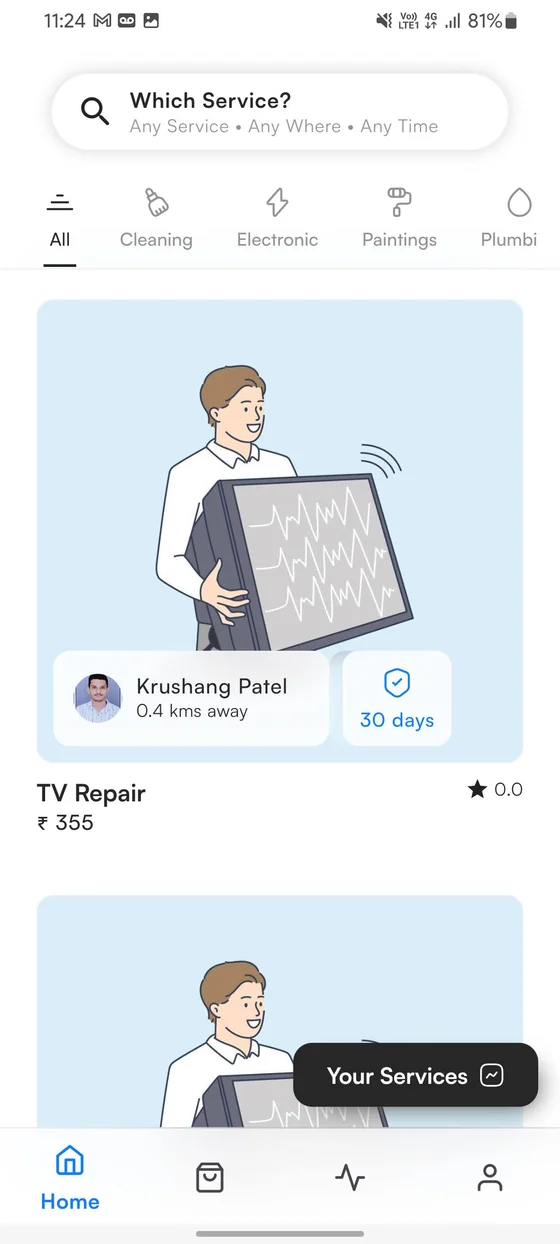
Put together, the whole business fits in one paragraph. A provider registers. Our team verifies them. They appear to customers nearby, next to everyone else in the area, and each sets their own price. Competition does the rest. The customer books the one they like, the provider keeps the money, and we take a commission of just 1%. Maybe not a great number, but one we could improve later.
And this is what one of those bookings looked like in the app.
Never only about the code
A hackathon is never only about tech. You have to understand the problem, find a solution, turn it into something digital, work out the business model, and even think about the legal side. More than anything, it tests your confidence and whether you think like an entrepreneur.
We coded for around 30 hours, through around 20 rounds of jury. Many of the hardest questions had nothing to do with code.
One was: what if a provider assaults a customer in their home? No feature answers that. You have to stand there and think about trust, verification and the law.
Another time, we were told to finish the entire product in 30 minutes. In a 36-hour hackathon, we knew that wasn't possible. We said yes anyway. They were checking our confidence, not our code.
Out of 166 teams
So that was what we woke up to: first prize, ₹1,50,000, out of 166 teams. Those teams included students from IITs, SVNIT2 and many well-known universities.
The story even made the local newspaper back home.
What I brought home
The prize was the easy part to count. What stayed with me was leading that team: four people with different knowledge, different natures, and one product to finish.
For a few reasons, I wasn't able to keep working on Home Helps. But the problem is still out there. If you want to build it, need guidance, or would like to build it together, I would love to connect.
I came from a small village. That only decided where I started.
Want to build this? Email me.